What white label web development means
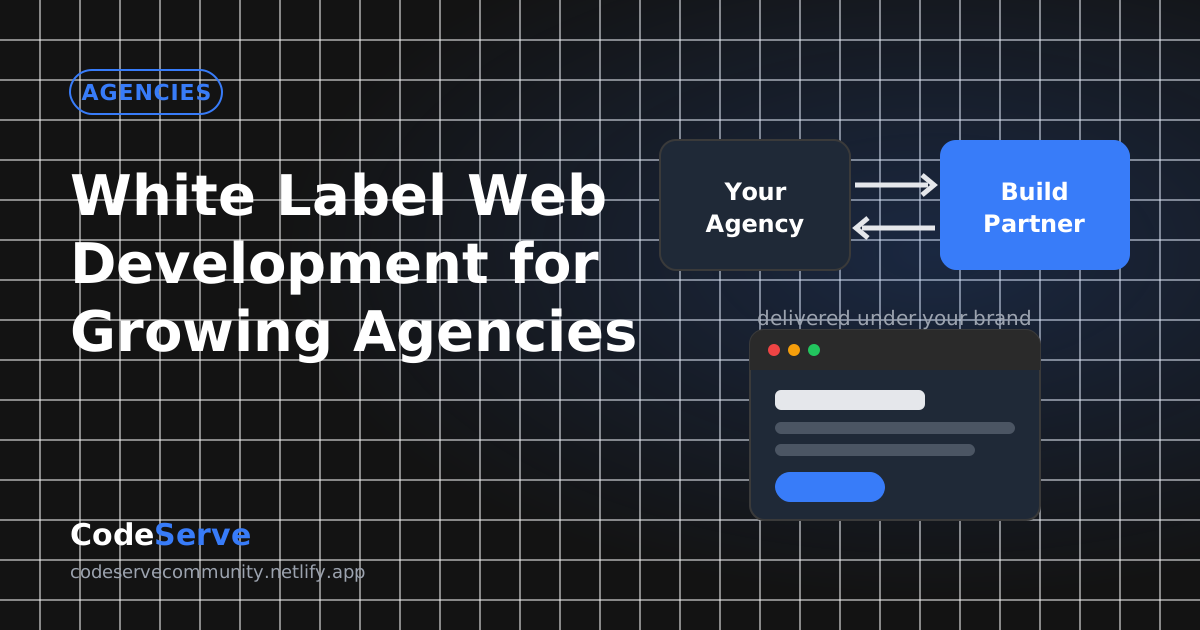
White label (sometimes called "private label") development means a development team builds websites, stores or apps for your clients, and you deliver them under your agency's name. Your client never deals with the partner. You keep the client relationship, the brand and the margin.
It is common in digital marketing agencies, design studios, branding firms, SEO companies and IT consultants who sell websites as part of a bigger package but don't want to hire and manage a full in-house development team.
A typical setup looks like this:
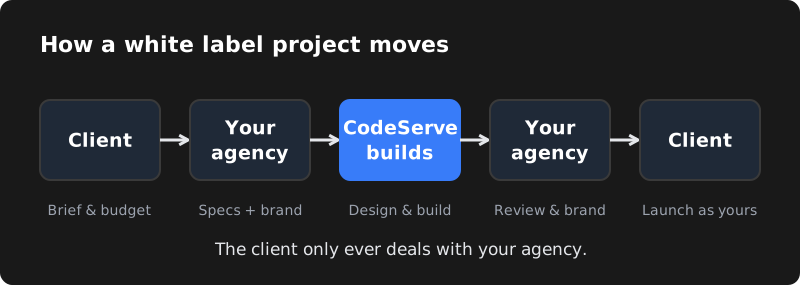
- You sell the project, agree the price and collect requirements from the client.
- You share a brief, designs (or brand guidelines) and content with your white label partner.
- The partner builds the website on a staging link, without any of their branding.
- You review it, show it to your client as your own work and pass on feedback.
- The partner makes the changes, launches on the client's hosting and hands over files and logins to you.
Why agencies use white label partners
Hiring developers sounds simple until you count everything that comes with it: salaries every month even when projects are slow, recruitment, training, laptops, software licences, leave cover and the time you spend managing them. A white label partner turns that fixed cost into a variable cost — you pay only when you have a project.
| In-house developer | White label partner |
|---|---|
| Fixed monthly salary, even in quiet months | Pay per project or per monthly retainer |
| One person's skill set | A team: designers, frontend, backend, QA, DevOps |
| Hiring and notice periods take weeks | Start a project within days |
| Work stops when they are on leave or resign | Team cover is the partner's responsibility |
| You manage the technical quality | Partner owns build quality; you own the client |
The other big reason is range. A client who came to you for social media may also want a WooCommerce store, a WhatsApp automation or a mobile app. With a partner, you can say yes to these instead of sending the client to another company — which often means losing them.
What you can white label
Almost any digital build can be white labelled. The most common services agencies resell are:
- WordPress business websites and landing pages
- WooCommerce and Shopify online stores
- Figma or Adobe XD designs converted to live websites
- Custom web apps, dashboards and portals
- Android and iOS mobile apps
- WhatsApp automation and AI chatbots
- Website speed, security and maintenance plans
- Technical SEO fixes and site migrations
Maintenance is especially useful for agencies: you sell a monthly care plan to the client, the partner does the updates and backups, and you earn recurring income without extra staff.
Pricing models and how agencies make a margin
White label partners usually work in one of three ways:
- Fixed price per project — best for websites and stores with a clear scope. You know your cost before you quote the client.
- Monthly retainer — a set number of hours or tasks each month. Good for agencies with a steady flow of small jobs and changes.
- Hourly — suits unclear or ongoing development work, but makes your own quoting harder.
How you price to your client is your decision. Many agencies add a markup on the partner's price to cover their own time for sales, project management, client communication and revisions. A simple way to think about it:
| Item | Example |
|---|---|
| Partner's price for a business website | ₹A |
| Your project management and client time | + hours × your hourly cost |
| Your risk buffer for extra revisions | + 10–15% |
| Your price to the client | Total + your profit |
How to choose the right white label partner
The partner's work carries your name, so choose carefully. Check these before you sign:
- Real, live portfolio sites you can open and test on mobile
- Signs an NDA and never contacts your clients directly
- No partner branding, credits or hidden links in the code or footer
- Clear written scope, timelines and revision rounds per project
- Staging links for every project before anything goes live
- Responds within working hours on WhatsApp or email
- Hands over source code, logins and files after payment
- Offers post-launch bug fixing and optional maintenance
Start with one small paid project — a landing page or a small website — before giving a partner a big client. You will learn more from one real project than from any sales call.
What to include in every project brief
Most white label problems start with an unclear brief. A good brief means fewer revisions, faster delivery and a happier client. Share these details with your partner for every project:
| Section | What to share |
|---|---|
| Client background | Industry, target customers, location and the goal of the website (leads, sales, bookings, information). |
| Pages and features | Sitemap, forms, payment gateway, WhatsApp button, blog, multilingual needs. |
| Design direction | Figma file, or brand colours, fonts, logo and two or three reference websites the client likes. |
| Content | Final text, images and videos — or whether the partner should use placeholders. |
| Technical setup | Hosting provider, domain access, platform (WordPress, Shopify, custom) and any integrations. |
| Deadline and milestones | Design approval date, staging date, launch date — with your buffer already included. |
Keep this as a reusable template. After two or three projects, your partner will know your standards and the process becomes much smoother.
Presenting white label work to your clients
Your client is buying from your agency, so the experience should feel completely yours:
- Use your own staging domain or project tool where possible, so preview links look like they come from you.
- Review everything before your client sees it. Check mobile layout, spelling, forms and speed yourself first. Catching small issues early builds your client's confidence.
- Collect feedback in one list. Combine client comments into one clear document instead of forwarding scattered WhatsApp messages to your partner.
- Hand over with your branding. Training videos, login documents and support contacts should carry your agency's name.
Agencies that do this well often find their clients come back for more services, because the delivery feels organised and professional from start to finish.
Risks and how to avoid them
| Risk | How to avoid it |
|---|---|
| Missed deadlines hurt your reputation | Agree milestones in writing and keep a buffer in the date you give your client. |
| Quality doesn't match your brand | Share a checklist (fonts, spacing, mobile, speed, forms) and review on staging. |
| Partner contacts your client | NDA and non-solicitation clause; you stay the only point of contact. |
| Scope creep eats your margin | Fix the scope before quoting; charge extras to the client as change requests. |
| Accounts locked with the partner | Register domains, hosting and business accounts in the client's or your name. |
A simple way to get started
- List the services clients ask you for that you currently turn down.
- Shortlist two or three partners and check their live work.
- Run one small paid test project with a clear brief.
- Create a standard brief template and review checklist for future projects.
- Package the service on your own website and proposals, with your pricing.
CodeServe works as a white label development partner for agencies in Hyderabad and across India — websites, stores, apps, WhatsApp automation and maintenance, delivered without our branding. You can read how it works on our white label development page.
Frequently asked questions
Will my client know a partner built the website?
Not if the partner works properly white label. There should be no partner name in the code, footer or emails, and the partner should never contact your client. Ask for an NDA to make this formal.
Who owns the website after it is built?
After full payment, the source code and files should belong to you or your client. Domains, hosting and business accounts should always be registered in your or your client's name, not the partner's.
How fast can a white label partner deliver a website?
It depends on scope. A simple business website can take around one to two weeks once content is ready, while stores and custom apps take longer. Always agree milestones in writing.
Can I white label ongoing maintenance as well?
Yes. Many agencies sell a monthly care plan under their own brand and let the partner handle updates, backups, security and small changes.
